This page contains affiliate links. We earn a small commission on purchases at no extra cost to you. This never influences our recommendations.
What Are Razor Bumps Exactly?
Razor bumps and ingrown hairs are often used interchangeably, but they are not the same thing — and understanding the difference can change how you treat them. Razor bumps are inflamed bumps that appear after shaving, typically caused by either an emerging hair pushing back into the skin (an ingrown hair) or by surface irritation from blade trauma. Most razor bumps are ingrown hairs, but not all ingrown hairs are razor bumps — ingrown hairs can also appear without any shaving at all.
The medical term pseudofolliculitis barbae (PFB) refers specifically to the chronic ingrown-hair condition that affects areas regularly shaved — most commonly the beard, neck, bikini line, and underarms. Roughly 60% of Black men and 30% of Latino men experience PFB regularly, due to the higher rate of curly hair patterns that re-enter the follicle.
The Critical Difference
The simplest way to distinguish a razor bump from an unrelated bump:
| Feature | Razor Bumps | Ingrown Hairs |
|---|
| Trigger | Always after shaving (or waxing) | Can occur without shaving |
| Appearance | Cluster of small red bumps | Often single bumps with visible hair |
| Timing | Hours to 2-3 days post-shave | Days to weeks; recurring |
| Distribution | Spread across shaved area | Localised to specific follicles |
| Hair visible? | Sometimes | Usually visible beneath skin |
Both respond to the same treatment (chemical exfoliation with salicylic acid), but the prevention strategy differs. For razor bumps, the focus is on shaving technique and tools. For chronic ingrown hairs, the focus is on follicle management.
How to Treat Razor Bumps Fast
1
Stop Shaving Immediately
Do not shave the affected area for 7-10 days. Continued shaving over inflamed follicles converts a manageable irritation into chronic pseudofolliculitis. This is the single most important step.
2
Cool Compress for 24 Hours
Apply a cool damp cloth to the area 2-3 times in the first 24 hours to reduce inflammation. After that, switch to warm compresses to encourage trapped hairs to surface.
3
Apply 2% Salicylic Acid Twice Daily
This is the gold-standard treatment for razor bumps. Salicylic acid dissolves the keratin plug trapping the hair while reducing follicle inflammation. Continue for 7-10 days.
4
Avoid Picking
Do not squeeze or pick at razor bumps. Doing so converts a manageable irritation into folliculitis (bacterial infection) and leaves dark spots. If you can clearly see a surface hair after a week of treatment, lift it gently with a sterilised needle.
Why You Get Razor Bumps Repeatedly
Recurring razor bumps almost always come down to one of four causes:
- Multi-blade cartridge razors — these cut hair below skin level, dramatically increasing ingrown hair rate. Switching to a single-blade safety razor reduces razor bumps by an estimated 50% within 4 weeks for most people.
- Shaving against the grain — produces a closer shave but pulls hair beneath the skin's surface. Always shave with the grain on areas prone to bumps.
- Dry shaving — shaving without proper preparation (warm water, shaving cream, sufficient time) traumatises follicles and skin barrier.
- Inadequate exfoliation — without regular exfoliation, dead skin builds up and traps hairs as they emerge, regardless of shave technique.
★ Best for Razor Bumps
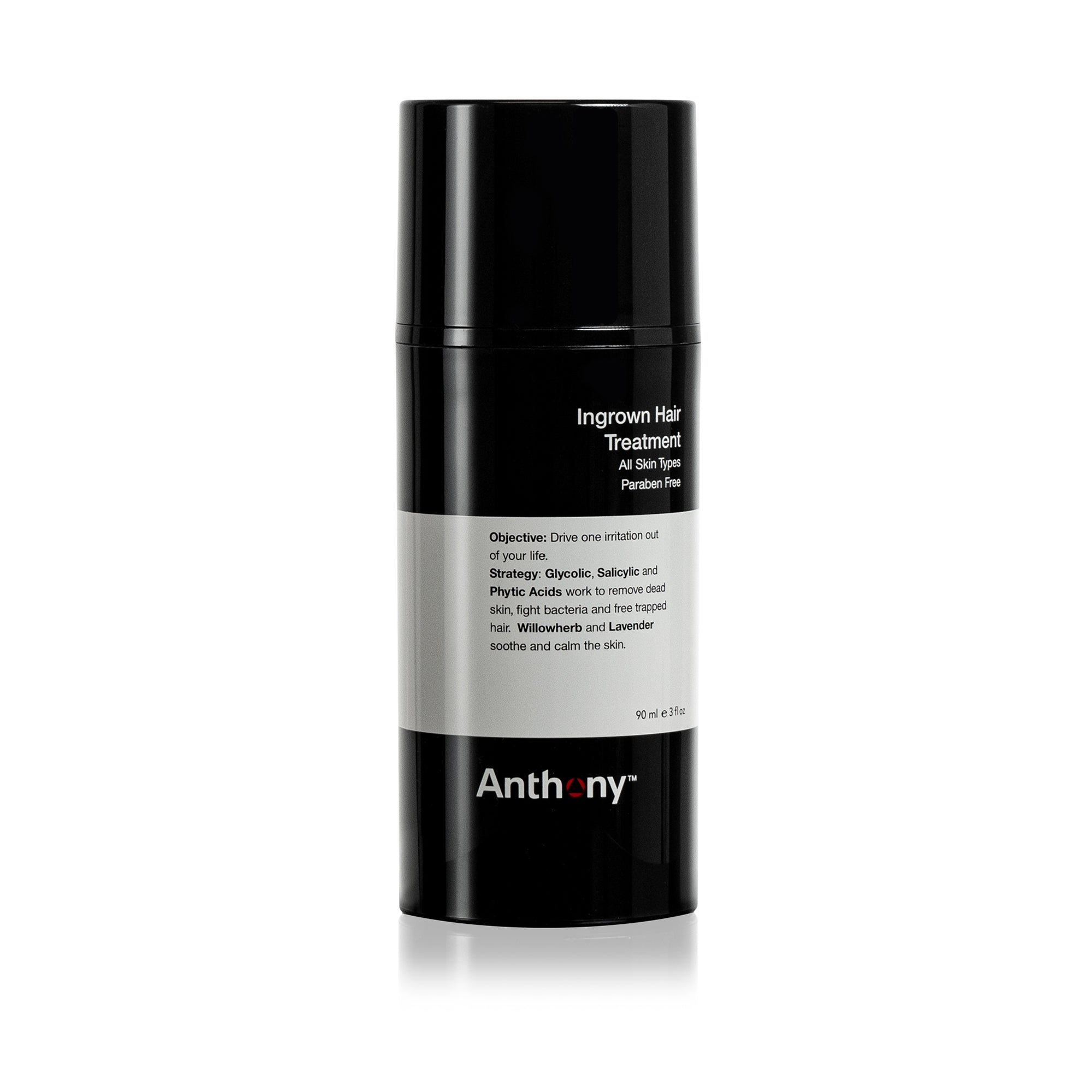
Anthony Ingrown Hair Treatment
The dual salicylic + glycolic acid formula targets both razor bumps and chronic ingrown hairs. Apply twice daily after shaving. Fragrance-free, suitable for sensitive post-shave skin.
Preventing Future Razor Bumps
Prevention combines tool changes with technique. The complete protocol:
- Shave at the end of your shower — softened skin and hair reduce trauma significantly
- Use a non-comedogenic shaving cream, not soap — provides lubrication and reduces blade drag
- Always shave with the grain on the first pass; if you need a second pass, go across the grain (never against)
- Rinse with cool water after shaving to close pores
- Apply a salicylic acid product within 1 hour of shaving to prevent ingrown hair formation before it starts
- Exfoliate 2-3x weekly with a chemical exfoliant on shaved areas
For complete shaving technique guidance, see our complete after-shaving guide.
When Razor Bumps Become Chronic
If razor bumps persist for more than 4 weeks despite proper technique and topical treatment, the condition may have progressed to chronic pseudofolliculitis barbae. At this stage, the only permanent solution is hair removal — typically laser hair removal, which after 6-8 sessions reduces hair density enough to eliminate the underlying cause.
For ongoing chronic razor bumps, consult a dermatologist. Prescription-strength treatments include topical retinoids, hydrocortisone for inflammation, and benzoyl peroxide if folliculitis develops.
Free Weekly Newsletter
Expert advice in your inbox
New product reviews, ingredient breakdowns, and dermatologist Q&As.
Free monthly newsletter. Unsubscribe anytime.
Related Guides