This page contains affiliate links. We earn a small commission on purchases at no extra cost to you. This never influences our recommendations.
Why Is My Ingrown Hair Bleeding?
An ingrown hair that bleeds is concerning to see — but in most cases, it's not dangerous and resolves with proper care. The bleeding has one of three causes, each with a different management approach.
Before going further: if the bleeding is significant (more than a few drops), spurting, or won't stop with 5 minutes of pressure, this is not a normal ingrown hair situation. See a doctor immediately. The rest of this guide assumes minor bleeding from an ingrown hair area.
Cause 1: Picking or Squeezing
The most common cause of ingrown hair bleeding is physical trauma — picking, squeezing, or attempting to pop the bump. This breaks blood vessels in the surrounding skin and can also create a small wound. The squeezing impulse is strongest with an ingrown that visually mimics a whitehead — the visual ambiguity is exactly what triggers the urge, even though the correct treatment is the opposite of what you'd do for a real pimple.
What to do:
1
Apply Direct Pressure
Use a clean cloth or gauze pad. Press firmly on the area for 3-5 minutes without lifting to check. Most minor ingrown hair bleeding stops within this time.
2
Clean with Saline or Mild Soap
Once bleeding stops, gently clean the area with sterile saline or mild soap and water. Avoid hydrogen peroxide — it damages healing tissue.
3
Apply Antibiotic Ointment
A thin layer of bacitracin or polysporin ointment for the first 48 hours prevents infection of the open wound. Cover with a small adhesive bandage if the area will be exposed to clothing friction.
4
Stop All Treatment for 48 Hours
Do not apply salicylic acid, glycolic acid, or any other active ingredient until the wound has scabbed and is no longer raw. These products burn open skin and slow healing.
5
Resume Salicylic Acid After 48 Hours
Once the wound has closed (light scab present), resume your normal ingrown hair treatment to address the underlying issue. Continue for 7-10 days.
Cause 2: Spontaneous Drainage
Some ingrown hairs spontaneously rupture and drain a small amount of blood and tissue fluid. This usually happens when the bump has been growing for several days and pressure builds up. Visually, this looks like a small amount of blood with possibly some clear or yellowish fluid coming from the bump.
This is generally a good sign — the body is releasing the trapped hair and sebum. Management:
- Clean the area gently with saline or mild soap
- Apply a thin layer of antibiotic ointment for 24 hours
- Do not apply heavy occlusive products (petrolatum, mineral oil) — these trap remaining bacteria
- Resume salicylic acid treatment after 24 hours
- Watch for signs of infection over the next 3-5 days
Cause 3: Folliculitis or Cystic Drainage
If the bleeding is accompanied by significant pus (yellow or green), an unpleasant odour, increasing pain, or a "bursting" sensation, this is not a simple ingrown hair — it's likely folliculitis or an infected ingrown hair cyst draining.
For these:
- Do not squeeze further — let it drain on its own under a clean gauze pad
- Apply warm compresses 3x daily to encourage continued drainage
- Apply antibiotic ointment after each cleaning
- See a doctor within 48 hours if drainage continues, the bump is large, or you have any fever
When Bleeding Is An Emergency
Seek immediate medical care if:
- Bleeding is profuse or pulsating (suggests an artery, not a follicle)
- Bleeding hasn't stopped after 10 minutes of firm pressure
- You see red streaking moving outward from the area (early cellulitis)
- You have a fever, chills, or feel systemically unwell
- The surrounding skin is hot, hard, and rapidly expanding
- You're on blood thinners (warfarin, aspirin daily) and bleeding won't stop
- The area becomes pale, numb, or cold (vascular compromise)
Preventing Ingrown Hair Bleeding
Prevention is straightforward: don't pick at ingrown hairs. The rest follows from this:
- Use chemical extraction (salicylic acid) instead of physical extraction — works equally well without trauma
- Keep nails short if you tend to absent-mindedly pick
- Cover persistent ingrown hairs with a hydrocolloid bandage — both prevents picking and accelerates healing
- Avoid mirrors that magnify bumps — magnification makes minor bumps look catastrophic and triggers picking
- Treat anxious-picking behaviour generally — if you pick at any skin area when stressed, address the picking habit broadly rather than just at ingrown hair sites
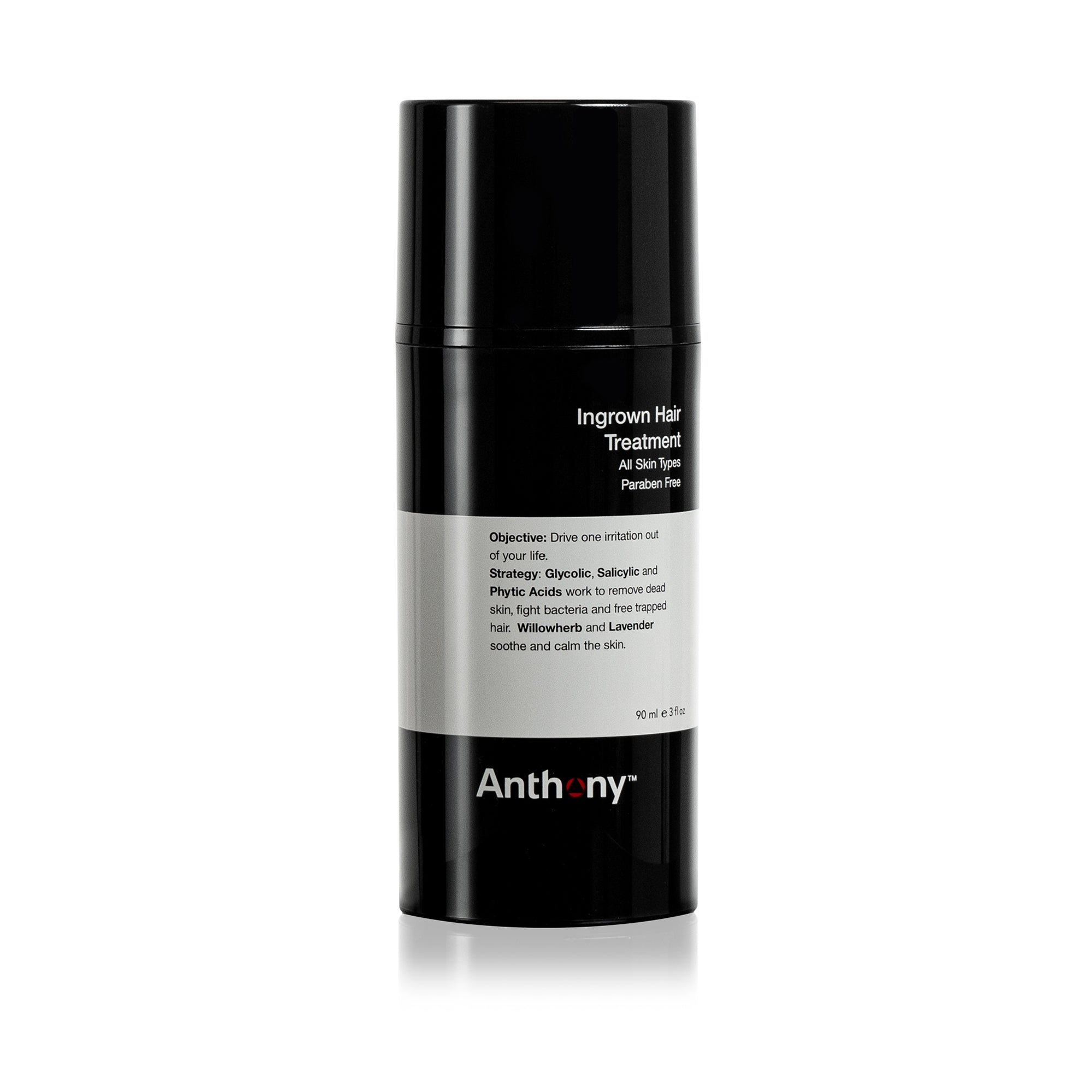
★ Picking-Free Treatment
Anthony Ingrown Hair Treatment
The most effective alternative to picking. Chemical exfoliation releases trapped hairs without skin trauma — no bleeding, no scarring, no infection risk. Apply twice daily.
What About Scarring?
Bleeding from an ingrown hair often leads to scarring or dark spots, especially in medium and dark skin tones. To minimise scarring after the wound heals:
- Daily SPF 30+ on the area for 3 months — UV exposure is the single biggest cause of permanent dark spots
- Vitamin C serum daily (after the wound has fully closed)
- Niacinamide for evening tone
- Patience — most post-inflammatory hyperpigmentation fades within 3-6 months with consistent care
- Tretinoin (prescription) for stubborn dark spots — accelerates fading by 50%
For chronic dark spot management, see our complete guide to ingrown hair scars and dark spots.
Free Weekly Newsletter
Expert advice in your inbox
New product reviews, ingredient breakdowns, and dermatologist Q&As.
Free monthly newsletter. Unsubscribe anytime.
Related Guides