
This page contains affiliate links. If you purchase through our links, we earn a small commission at no extra cost to you. This never influences our recommendations — we only feature products we have tested and believe in. Read our full disclosure.
Why Ingrown Hairs Happen
An ingrown hair occurs when a hair that has been cut or removed grows back into the skin rather than upward through the follicle opening. Two mechanisms drive this: the hair curls back on itself as it grows — more common in naturally curly hair — or a layer of dead skin cells blocks the follicle opening, trapping the emerging hair beneath the surface.
Knowing which mechanism applies to you determines which prevention strategy to prioritise. Straight hair with persistent ingrowns? Dead skin buildup is almost certainly the cause. Coarse, curly hair — particularly on face, neck, or bikini area? The curl pattern itself is the primary driver, and your blade is making it worse. If you're not sure which mechanism applies to you, our routine-matching quiz identifies the dominant cause based on your symptoms.

Multi-blade cartridge razors are one of the most underappreciated causes of ingrown hairs. Each successive blade lifts and cuts the hair fractionally below the skin surface. When the hair retracts, the sharp tip sits beneath skin level — and the next growth cycle starts underground. Switching to a single-blade razor resolves this for many people within the first week.
Step 1: Prepare the Skin Properly
The biggest mistake most people make is shaving on unprepared skin. Dry shaving, or shaving after just a few seconds of water exposure, dramatically increases friction and the likelihood of hairs being cut unevenly and at bad angles.

Warm Water & Time
Shave after a shower, not before one. Two to three minutes of warm water exposure softens the hair shaft by up to 70%, making it far easier to cut cleanly at the surface. Cold water tightens the follicle and causes hair to retract slightly — exactly the wrong condition for a clean shave.
A lightweight pre-shave oil applied before your shaving cream creates a secondary glide layer that reduces the blade's tendency to tug the hair before cutting it. Tugging is what causes the hair to be pulled slightly out of the follicle before being severed — producing a sharp angled tip pointing toward the follicle wall.
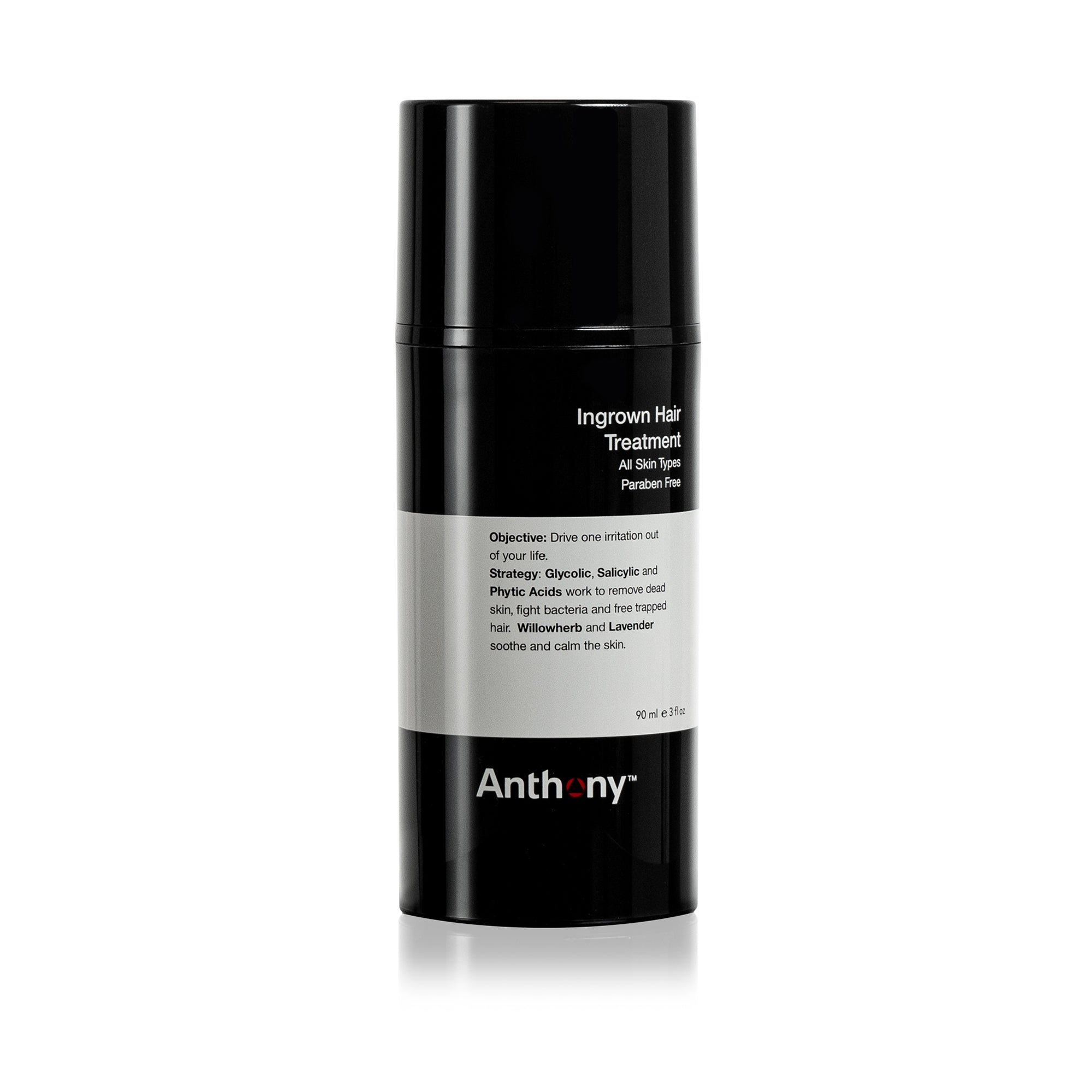
Salicylic + glycolic acid. Apply immediately post-shave to prevent dead skin buildup over the follicle opening during regrowth. Fragrance-free.
Step 2: Blade Choice Is Everything
No amount of post-shave treatment compensates for the wrong blade. This is the single highest-leverage decision you can make for ingrown hair prevention.
Single-Blade vs. Multi-Blade
A single-blade safety razor cuts the hair at exactly skin level. A five-blade cartridge razor cuts below skin level on the final blade pass. For ingrown hair-prone skin, this distinction is decisive. Safety razors have a two-week learning curve after which most people find them faster, closer, and more comfortable than cartridges — and a fraction of the ongoing cost.
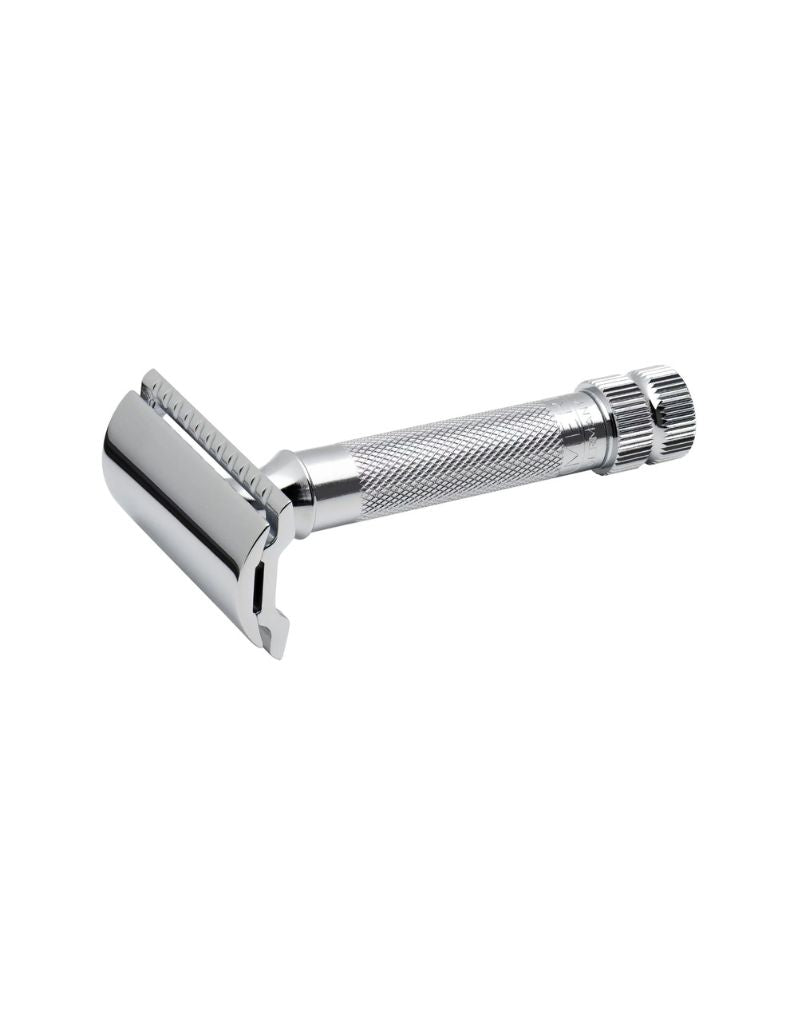
The ideal first safety razor. Forgiving angle geometry, excellent weight balance, built to last indefinitely. Most people see dramatic improvement within one week of switching.
Step 3: Technique During the Shave
Direction: Shave in the direction of hair growth for the first pass. Against-the-grain shaving cuts hair at a sharper angle, leaving a tip that is more likely to pierce back through the follicle wall during regrowth. A second pass across the grain (perpendicular) is acceptable if needed — but never a third pass against the grain.
Pressure: The blade should glide, not scrape. With a safety razor, the weight of the handle is sufficient pressure — adding downward force is counterproductive. With cartridges, pressing harder when the blade is dull is your signal to change it, not press harder.
Skin tension: Use your free hand to pull the skin taut opposite to the blade's travel direction. This creates a flatter cutting surface, reduces skin bunching into the blade, and allows a more consistent cut across all hairs in the area.

Step 4: Post-Shave Aftercare
What you do immediately after shaving determines whether the freshly cut hairs grow back cleanly or curl into the skin. This step is where most people — even those with good technique — leave results on the table.
Rinse with cool water to close the follicle opening around the freshly cut hair tip. Then, apply a salicylic or glycolic acid product to clean, dry skin within 10 minutes of finishing. The acid penetrates the follicle and prevents dead skin cells from accumulating over the opening during the regrowth period — the most effective single preventive action available. Both salicylic and glycolic acid use is restricted during pregnancy; if you're expecting, our guide to ingrown hair prevention during pregnancy walks through the substitutions that work without these acids.
"Applied consistently, a 2% salicylic acid solution post-shave reduces ingrown hair recurrence in the vast majority of cases I see. It's inexpensive, evidence-based, and patients are always surprised by how effective it is."
Step 5: Between-Shave Exfoliation
Regular exfoliation between shaves keeps follicle openings clear, ensuring emerging hairs have an unobstructed path upward. Two to three times per week is sufficient for most people. Over-exfoliation — daily use of strong acids — can damage the skin barrier, paradoxically increasing ingrown hair risk.
Chemical exfoliants (AHAs and BHAs) are generally more effective than physical scrubs because they penetrate the follicle — something a surface scrub cannot do. Using both in rotation often produces the best results. If you're not sure how to assemble all of this into a coherent weekly routine, our 60-second routine builder matches the right tools, products, and frequency to your situation.
Best overall. Salicylic + glycolic, fragrance-free. Apply after every shave.
The best razor upgrade for ingrown-prone skin. Single blade, lifetime tool.
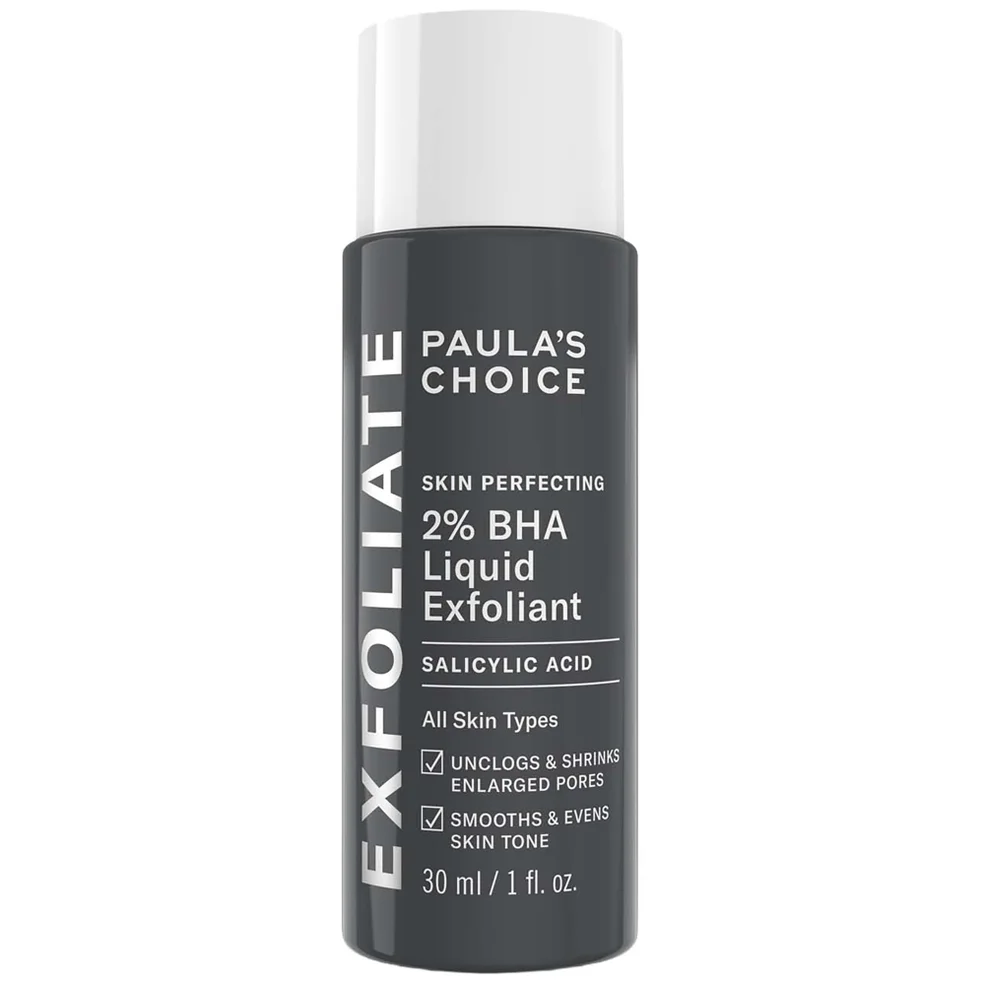
Use 2–3x weekly between shaves to keep follicle openings clear.