This page contains affiliate links. If you purchase through our links, we earn a small commission at no extra cost to you. This never influences our recommendations — we only feature products we have tested and believe in. Read our full disclosure.
First: Diagnose Your Ingrown Hair
Before treating, identify which type of ingrown hair you have. The correct treatment differs significantly between them.
| Type | What It Looks Like | Correct Treatment |
|---|
| Surface trapped | Small bump, hair visible just under skin, no pus | Warm compress + salicylic acid |
| Deep ingrown | Larger firm bump, hair not visible, tender to touch | Chemical exfoliation only — no extraction |
| Inflamed (papule) | Red, raised, warm — no pus present | Warm compress + anti-inflammatory + salicylic acid |
| Infected (pustule) | Filled with yellow/white pus, very red, painful | Warm compress + topical antibiotic — see a doctor if worsening |
| Post-ingrown dark spot | Hair gone, dark flat mark remains | Glycolic acid + kojic acid brightening treatment |
Treatment by Severity
Mild — Surface Trapped Hair
This is the most common and most treatable type. Apply a salicylic acid treatment twice daily. The acid dissolves the dead skin layer blocking the follicle opening. Most surface ingrown hairs resolve within 5–7 days without any physical extraction.
★ Best for Mild Cases
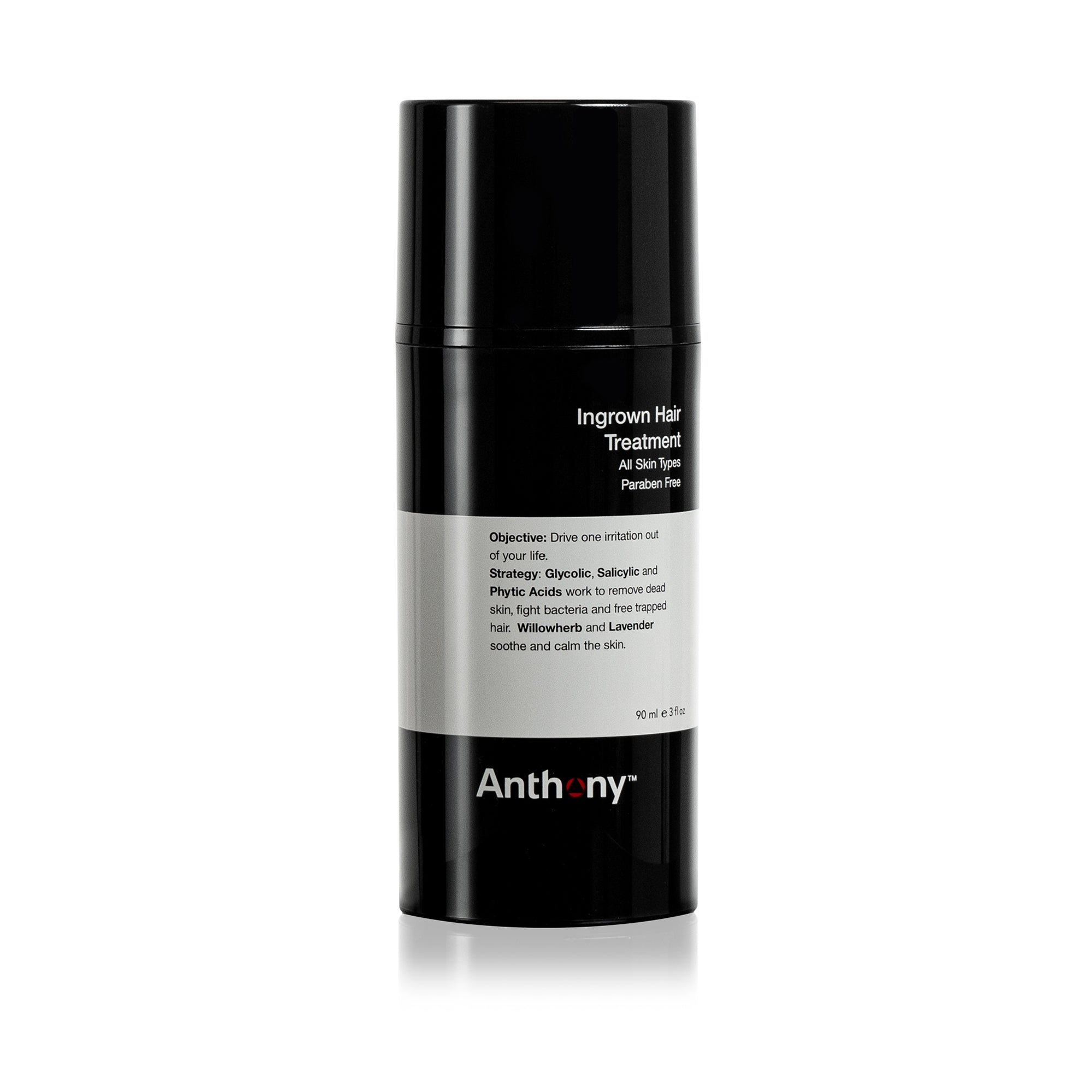
Anthony Ingrown Hair Treatment
2% salicylic acid + glycolic acid. Apply twice daily. The most effective OTC formula for surface-trapped ingrown hairs across all body areas.
Moderate — Inflamed But Not Infected
If the bump is red and tender but contains no pus, inflammation is your first target. Apply a warm compress twice daily for 3–5 minutes to reduce swelling. Follow immediately with a salicylic acid treatment. Avoid any extraction attempt until the inflammation subsides — the swelling makes it impossible to safely reach the hair and significantly increases scarring risk.
Infected — Pus Present
An infected ingrown hair has pus, significant redness spreading beyond the bump, warmth, and pain. Warm compresses help draw the infection to a head. Do not attempt extraction. A topical antibiotic (available OTC in most pharmacies) can help resolve mild infections. If the area is spreading, increasingly painful, or not improving after 5 days, see a doctor — oral antibiotics may be needed.
Dark Spots After Resolution
Post-inflammatory hyperpigmentation (PIH) is extremely common, particularly on darker skin tones. The dark mark is melanin deposited in response to the inflammation — it is not permanent, but fades slowly without treatment. A glycolic acid and kojic acid combination accelerates this significantly.
★ Best for Dark Spots
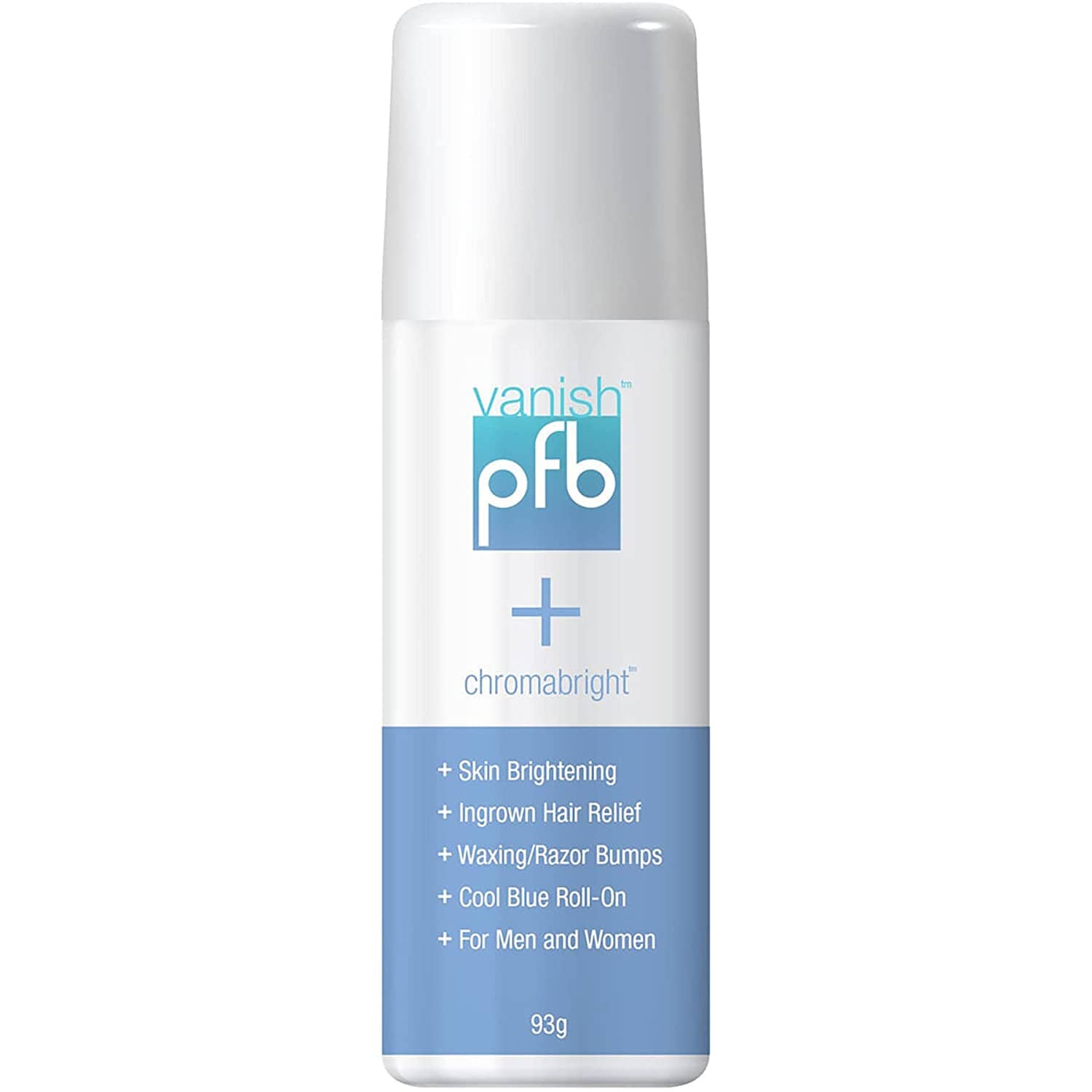
PFB Vanish + Chromabright
Glycolic acid exfoliates; Chromabright brightening agent fades hyperpigmentation. Roll-on format is precise and non-messy. Start applying once the ingrown hair has fully resolved.
When to See a Doctor
Most ingrown hairs resolve with home treatment. See a dermatologist if: the infection is spreading beyond the bump, you develop a fever, the ingrown hair recurs in the same spot repeatedly, or you have a deeply embedded cyst that has been present for more than 3 weeks without improvement. A dermatologist can drain large cysts safely and prescribe prescription-strength retinoids for chronic cases.
"For chronic ingrown hairs that keep returning in the same location, the underlying follicle may be damaged. Laser hair removal of that specific follicle is often the most effective permanent resolution."
Related Guides