Troubleshooting
Ingrown Hair Won't Come Out:
5 Causes & What to Do
If an ingrown hair won't come out after weeks, one of five causes is to blame — how to diagnose and resolve treatment-resistant ingrowns.

If an ingrown hair won't come out after weeks, one of five causes is to blame — how to diagnose and resolve treatment-resistant ingrowns.
This page contains affiliate links. We earn a small commission on purchases at no extra cost to you. This never influences our recommendations.
You've tried warm compresses. You've applied salicylic acid for two weeks. You've maybe (against advice) tried tweezing. And the bump is still there. This is one of the most frustrating skin problems, and it almost always comes down to one of five specific causes.
The good news: each cause has a specific solution. The bad news: continuing to do what hasn't worked won't suddenly start working. This guide diagnoses why your ingrown hair is stuck and tells you exactly what to do differently.
The most common reason an "ingrown hair" doesn't respond to ingrown hair treatment is that it isn't an ingrown hair. The most common alternative diagnoses:
Stuck ingrown hairs in the same spot point to follicle scarring. The treatment options when home care isn't enough.
| Condition | How to Tell | What Works |
|---|---|---|
| Ingrown hair cyst | Deep, firm, painful bump (no visible hair) | Dermatologist drainage |
| Folliculitis | Multiple small white-headed pustules | Antibiotics |
| Sebaceous cyst | Soft, mobile bump with central pore | Surgical removal |
| Lipoma | Soft, painless, slow-growing | Surgical removal if bothersome |
| Boil (furuncle) | Hot, painful, growing, with pus | Antibiotics, drainage |
| Hidradenitis suppurativa | Recurring deep cysts in armpits/groin | Specialist dermatology care |
If your bump has lasted 3+ weeks despite proper ingrown hair treatment, it's worth getting a clinical diagnosis. A dermatologist visit takes 10 minutes and prevents months of unsuccessful self-treatment.
Some ingrown hairs are buried deeply enough that surface treatment can't reach them. Signs of a deep ingrown hair:
For deep ingrown hairs, salicylic acid alone often isn't enough. The protocol that works:
Most "salicylic acid isn't working" cases are actually application issues, not product failures. Common mistakes:
Some ingrown hairs grow horizontally beneath the skin rather than upward. These are called "transfollicular" ingrown hairs and they don't surface — they keep growing sideways under the skin.
You can sometimes feel a transfollicular hair as a small thread under the skin. They're more common in:
For these, chemical treatment alone often won't work. The hair needs to be physically released. This is a case where a dermatologist visit is appropriate — they can use a sterile needle to free the hair and start it growing in the correct direction.
If you've been dealing with the same bumps in the same area for 3+ months and treatment cycles temporarily clear them but they come back, you likely have chronic pseudofolliculitis barbae (PFB). This is a specific medical condition, not just bad luck.
PFB requires a different approach: address the underlying cause (hair removal trauma) rather than just treating individual bumps. The options:
For complete information on PFB, see our pseudofolliculitis barbae guide.
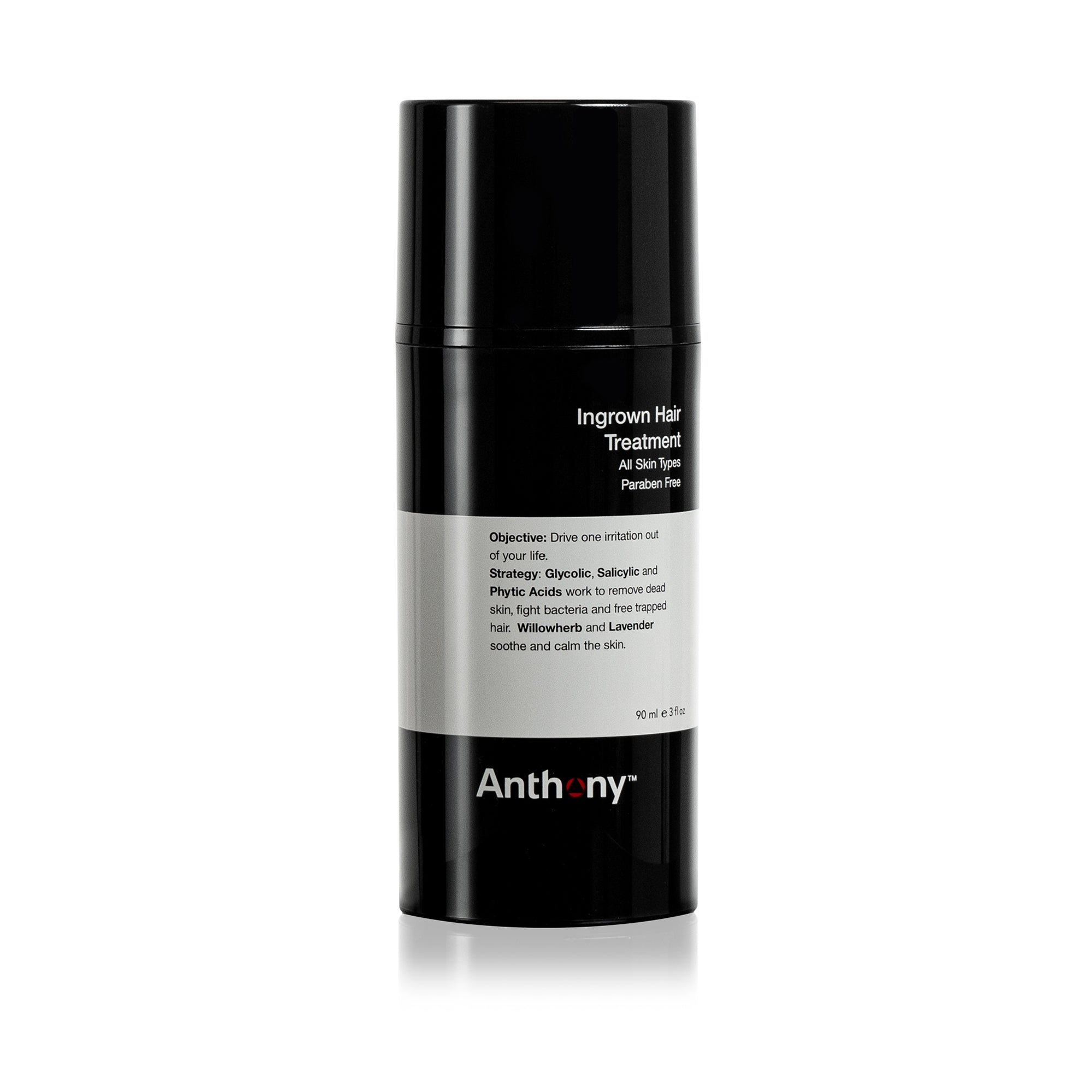
Combines salicylic + glycolic acid for cases where single-acid treatments have failed. Apply twice daily for a full 14 days before deciding it isn't working. Most resistant cases respond by week 2.
Don't wait the full 3-4 weeks if you see any of:
New product reviews, ingredient breakdowns, and dermatologist Q&As.
Free monthly newsletter. Unsubscribe anytime.
Get expert tips, new product reviews, and dermatologist Q&As. Free, every month.