This page contains affiliate links. We earn a small commission on purchases at no extra cost to you. This never influences our recommendations.
Should You Actually Pop an Ingrown Hair?
The honest answer most articles won't give you: in most cases, no — and the bumps you most want to pop are the ones you should never touch. Squeezing an ingrown hair almost always introduces bacteria, increases scarring risk, and converts a self-resolving issue into folliculitis or post-inflammatory hyperpigmentation that can take months to fade.
That said, there are specific cases where safe extraction is appropriate, and there is a correct technique. This guide covers both — when not to extract, and exactly how to do it safely when extraction is genuinely warranted. Many cases never need extraction at all — see our protocol for treating ingrown hairs without tweezers, which handles roughly 80% of bumps with chemistry alone.
When You Should NOT Pop
Do not attempt to extract an ingrown hair if any of the following apply:
- You cannot see the hair beneath the skin — extraction without visible hair causes trauma without solving anything
- The bump is fresh (less than 5-7 days old) — the hair has not had time to migrate to the surface; chemical exfoliation is more effective
- The bump has pus or yellow fluid — this indicates folliculitis, which requires antibiotics, not extraction. If your ingrown hair has progressed to look like a pimple, the same rule applies: treat the underlying infection, do not pop.
- The bump is deep, red, and very painful — likely an ingrown hair cyst, which requires dermatologist treatment
- The skin around the bump is hot, spreading red, or streaking — early signs of cellulitis, requires immediate medical attention
- You're in the bikini area or near the eye — these areas have higher infection risk and should be left to professionals if extraction is truly needed
- You have darker skin (Fitzpatrick III-VI) — extraction trauma in darker skin almost always leaves a dark spot that can persist for 6+ months
When Extraction Is Appropriate
Safe extraction may be considered if all of the following are true:
- You can clearly see the dark hair loop beneath the skin's surface
- The bump is at least 7 days old and you've been treating with warm compresses + salicylic acid
- The bump is firm but not severely inflamed
- There is no pus, no yellow drainage, and no spreading redness
- The skin is not in a high-friction area (bikini, neck under collar, bra strap line)
- You have proper sterilised tools and clean hands
The Safe Extraction Method (Step by Step)
1
Apply a Warm Compress for 10 Minutes
A warm, damp washcloth held to the bump for a full 10 minutes softens the skin, opens the follicle, and brings the hair closer to the surface. This step alone can release some hairs without any tool intervention.
2
Sterilise a Sewing Needle
Use a sewing needle (not tweezer tips, not a pin) — these are the right diameter and sharpness. Sterilise by holding the tip in a flame for 5 seconds until red, then wiping with 70% isopropyl alcohol. Let cool before use. Never use a needle on multiple bumps without re-sterilising.
3
Wash Your Hands and the Skin
Wash hands thoroughly with soap and water. Wipe the bump area with 70% isopropyl alcohol and let it dry completely. This step is non-optional; skipping it is the most common cause of post-extraction infection.
4
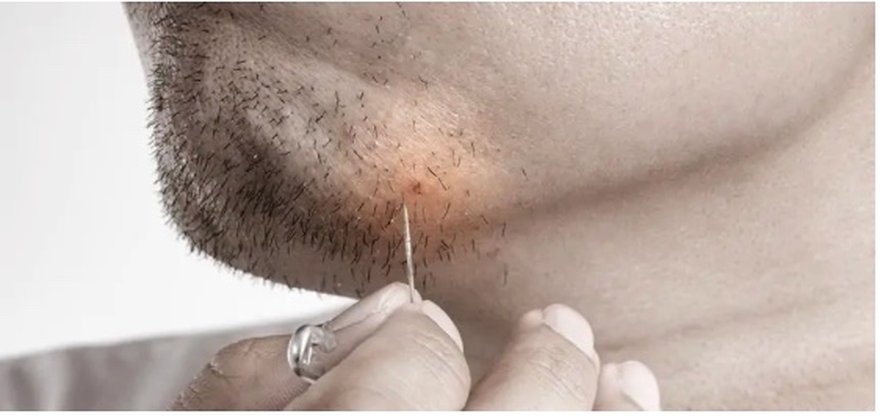
Slide the Needle UNDER the Hair Loop
Hold the needle parallel to the skin (not perpendicular) and slide the tip under the visible hair loop. The motion is sideways, not stabbing. You are lifting the hair from below — not piercing the skin. If you cannot slide the needle under the hair without breaking skin, stop — the hair is not surface-ready.
5
Lift, Do Not Pull
Gently lift the loop of hair upward. The hair should release from beneath the skin without resistance. Do not pull the hair fully out by the root. This causes trauma and creates the conditions for the next ingrown hair. Lifting it free is sufficient.
6
Apply Antiseptic and Salicylic Acid
Wipe the area with isopropyl alcohol or apply a thin layer of antibiotic ointment. Then apply your salicylic acid treatment. Repeat the salicylic acid twice daily for 5-7 days as the skin heals.
7
Do Not Pick at the Resulting Skin
A small scab will form over the next 24-48 hours. Leave it. Picking the scab restarts the inflammation cycle and significantly increases scarring risk.
Critical Safety Note
If extraction is painful, the hair resists lifting, or you see blood beyond a single drop, stop immediately. The hair is not ready to be released. Apply more warm compresses and salicylic acid, and try again in 2-3 days — or simply wait for the body to clear it naturally over 7-14 days.
The Better Alternative: Chemical Extraction
The reason most dermatologists discourage physical extraction is that salicylic acid does the same job — releases the trapped hair — without the infection and scarring risk. The mechanism: salicylic acid dissolves the keratin plug at the follicle opening, allowing the hair to emerge naturally. It works on every ingrown hair simultaneously, without the per-bump risk of a needle.
For 80% of ingrown hairs, twice-daily 2% salicylic acid combined with warm compresses fully resolves the bump within 7-14 days without any extraction needed. Extraction is only better for the 20% where the hair is genuinely surface-visible and treatment-resistant.
★ Chemical Extraction Alternative
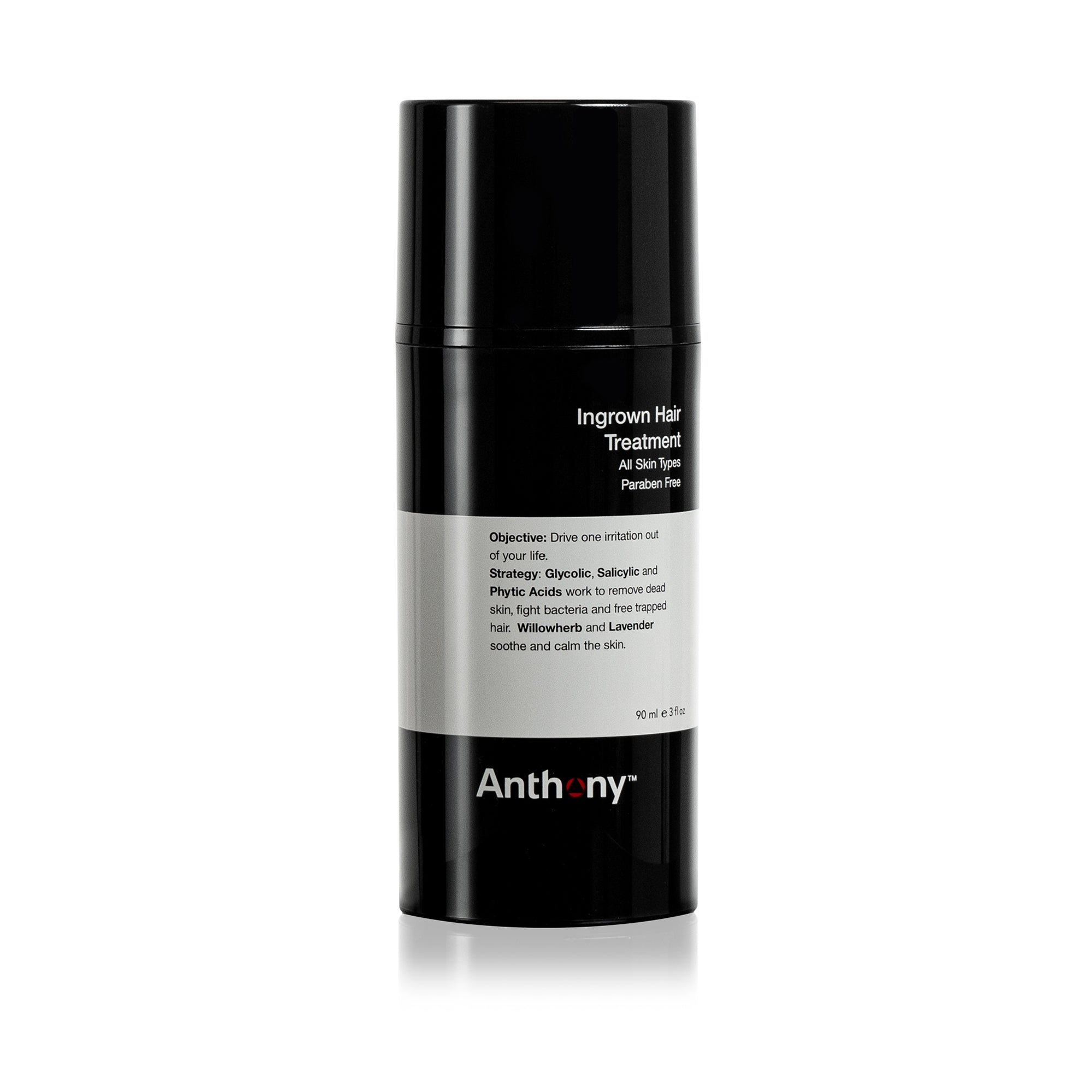
Anthony Ingrown Hair Treatment
For most ingrown hairs, chemical extraction with salicylic + glycolic acid is safer and more effective than physical extraction. Apply twice daily for 7-10 days. No scarring, no infection risk.
What If I Already Picked at It?
If you've already squeezed or picked at an ingrown hair, do the following:
- Wash the area with mild soap and water
- Apply 70% isopropyl alcohol to disinfect the broken skin
- Apply a thin layer of antibiotic ointment for the first 48 hours
- Switch to salicylic acid treatment after 48 hours to encourage healing
- Avoid further shaving in the area for at least 7 days
- Watch for signs of infection: spreading redness, increasing pain, fever, pus formation
If any infection signs develop, see a doctor within 24 hours. Antibiotic treatment caught early prevents serious complications.
Free Weekly Newsletter
Expert advice in your inbox
New product reviews, ingredient breakdowns, and dermatologist Q&As.
Free monthly newsletter. Unsubscribe anytime.
Related Guides