This page contains affiliate links. If you purchase through our links, we earn a small commission at no extra cost to you. This never influences our recommendations — we only feature products we have tested and believe in. Read our full disclosure.
Dark Spots vs. True Scars
Most "scars" from ingrown hairs are not true scars — they are post-inflammatory hyperpigmentation (PIH). PIH is a darkening of the skin caused by excess melanin deposited in response to inflammation. It is flat (not raised or indented), temporary, and highly treatable with topical products.
True scars — raised keloid tissue or indented atrophic scars — are less common and typically result from repeated squeezing, deep infection, or aggressive extraction. These are harder to treat at home and may require professional intervention.
| Type | Appearance | Treatment | Timeline |
|---|
| PIH (dark flat mark) | Flat, brown or dark patch | Glycolic acid + kojic acid | 4–12 weeks |
| Erythema (red mark) | Flat, pink or red patch | Niacinamide + time | 4–8 weeks |
| Keloid scar | Raised, firm, flesh-coloured | Silicone gel, dermatologist | Months to years |
| Atrophic scar | Indented, pitted | Retinoids, microneedling | Professional treatment |
The Ingredient Science
For PIH — the most common post-ingrown dark mark — these are the evidence-backed actives:
- Glycolic acid — accelerates surface cell turnover, removing pigmented cells faster and revealing clearer skin beneath. Use 5–10% on the body, 5% on the face.
- Kojic acid — inhibits tyrosinase, the enzyme that triggers melanin production. Directly reduces new pigmentation being deposited in the affected area.
- Vitamin C — antioxidant that brightens existing pigmentation and prevents new melanin production. Most effective in stable L-ascorbic acid formulations of 10–20%.
- Niacinamide — reduces melanin transfer between skin cells, brightens PIH over 8–12 weeks. Very well tolerated on sensitive skin.
- Azelaic acid — anti-inflammatory and tyrosinase inhibitor. Particularly effective for PIH on darker skin tones.
★ Best for Dark Spots
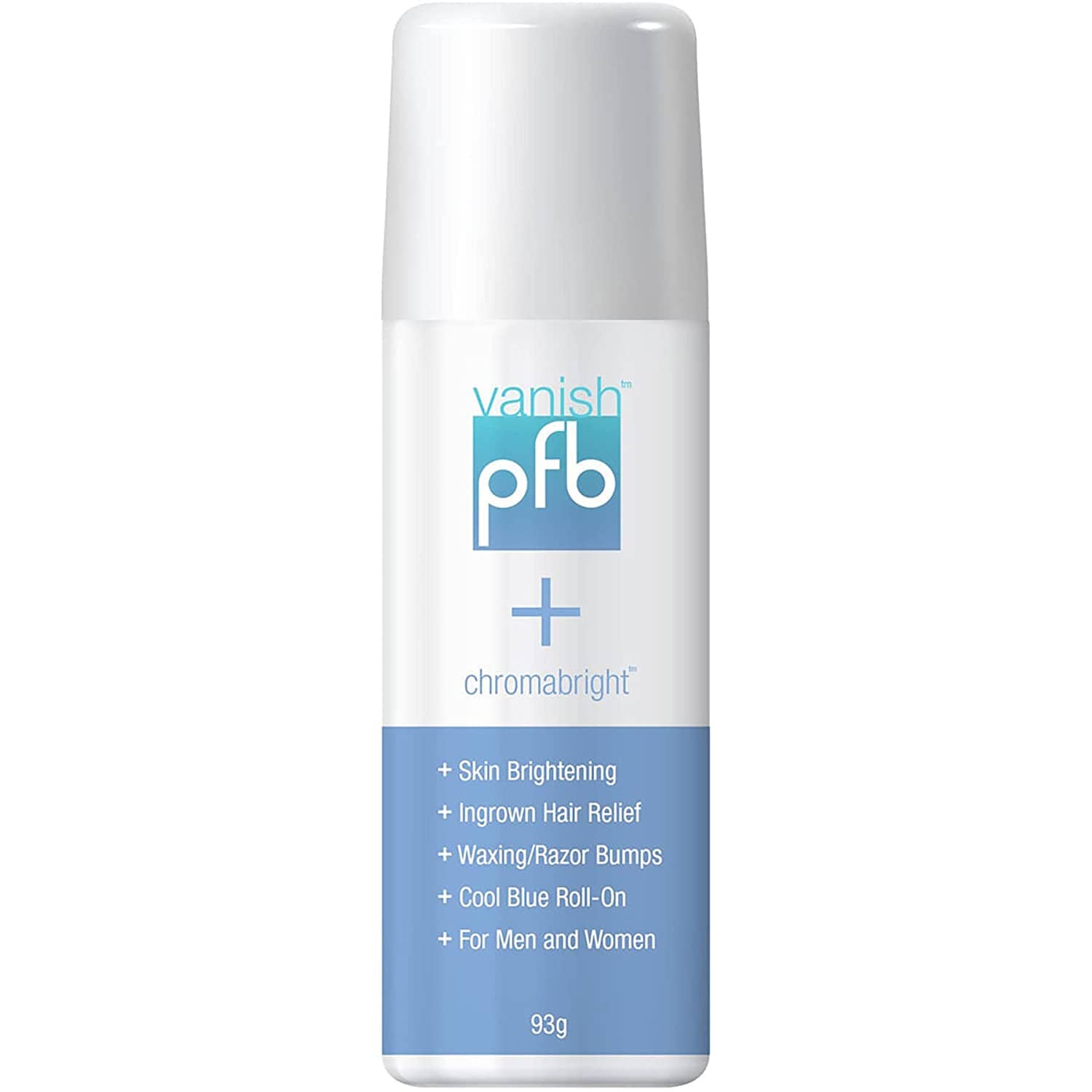
PFB Vanish + Chromabright
Our top-rated product specifically for post-ingrown dark spots. Glycolic acid accelerates cell turnover; Chromabright (a kojic acid derivative) inhibits melanin production. Roll-on applicator is precise.
Critical Rule: Sun Protection
UV exposure is the single biggest factor that worsens and prolongs PIH. Every time a dark spot is exposed to the sun without SPF protection, the melanin production is triggered again, undoing weeks of treatment progress. Apply SPF 30+ to all treated areas exposed to daylight throughout your treatment period — and beyond. This is non-negotiable for visible results.
How Long Does It Take?
With consistent daily application of a glycolic + kojic acid formula and daily SPF, most PIH from ingrown hairs fades noticeably in 4–6 weeks and substantially in 8–12 weeks. Darker skin tones typically take longer due to higher baseline melanin activity. Consistency is everything — missing applications significantly slows the process.
"PIH from ingrown hairs is almost always reversible. The combination of glycolic acid for turnover, kojic acid for melanin inhibition, and strict sun avoidance is the standard-of-care approach — and it works reliably with patience."
When to See a Dermatologist
See a dermatologist if: your dark spots have not improved after 12 weeks of consistent topical treatment, you have raised keloid scarring, the marks are in a sensitive area requiring prescription-strength treatment, or you have Fitzpatrick skin type IV–VI and want to avoid the risk of worsening pigmentation with incorrect products. Prescription options like tretinoin, hydroquinone, and chemical peels are significantly more powerful than OTC products.
Related Guides