This page contains affiliate links. We earn a small commission on purchases at no extra cost to you. This never influences our recommendations.
What Causes Ingrown Hairs on the Chest and Back?
Ingrown hairs on the chest and back are extremely common, particularly in men and in anyone who shaves, waxes, or sugars body hair. Three factors converge to make these areas especially prone:
- Coarse, curly body hair — chest and back hair tends to be thick and prone to curling, which significantly increases the chance of hair re-entering the follicle as it grows back after cutting.
- Friction from clothing — shirts, bras, backpacks, and tight athletic wear all create constant friction that can push emerging hairs sideways into the follicle wall, especially across the upper back and shoulders.
- Trapped sweat and sebum — the back and chest produce significant sebum and sweat, which combine with dead skin to clog follicles. A clogged follicle is a follicle the hair cannot exit cleanly.
The most common scenario: a man who waxes, sugars, or shaves his chest or back develops a cluster of red, tender bumps 3-5 days later. These almost always represent ingrown hairs rather than acne, despite their similar appearance. If you also experience ingrown hairs in the underarm, the underlying mechanism is the same and the prevention protocol overlaps significantly.
Ingrown Hair vs Bacne: How to Tell the Difference
Back acne (bacne) and ingrown hairs on the back look similar but require different treatments. Confusing the two is the single most common reason people fail to clear these bumps. Use this comparison:
| Feature | Ingrown Hair | Bacne / Folliculitis |
|---|
| Trigger | Shaving, waxing, sugaring | Sweat, clogged pores, bacteria |
| Pattern | Tender single bumps with visible hair | Multiple small whiteheads or pustules |
| Hair visible? | Often visible beneath skin | No hair, pus or sebum filled |
| Timing | 3-7 days after hair removal | Any time; often correlates with sweat |
| Treatment | Salicylic acid, warm compress | Benzoyl peroxide, antibacterials |
Both can coexist. If you have both bacne and ingrown hairs, salicylic acid is the rare ingredient that helps both — it exfoliates dead skin (clears acne) and dissolves the keratin plug (releases ingrown hairs). It is the most efficient single product for the area.
How to Treat Chest & Back Ingrown Hairs
Treatment for chest and back ingrown hairs follows the standard protocol — warm compress, chemical exfoliation, then prevention — but with adjustments for the larger surface area and friction exposure.
1
Warm Compress, Twice Daily
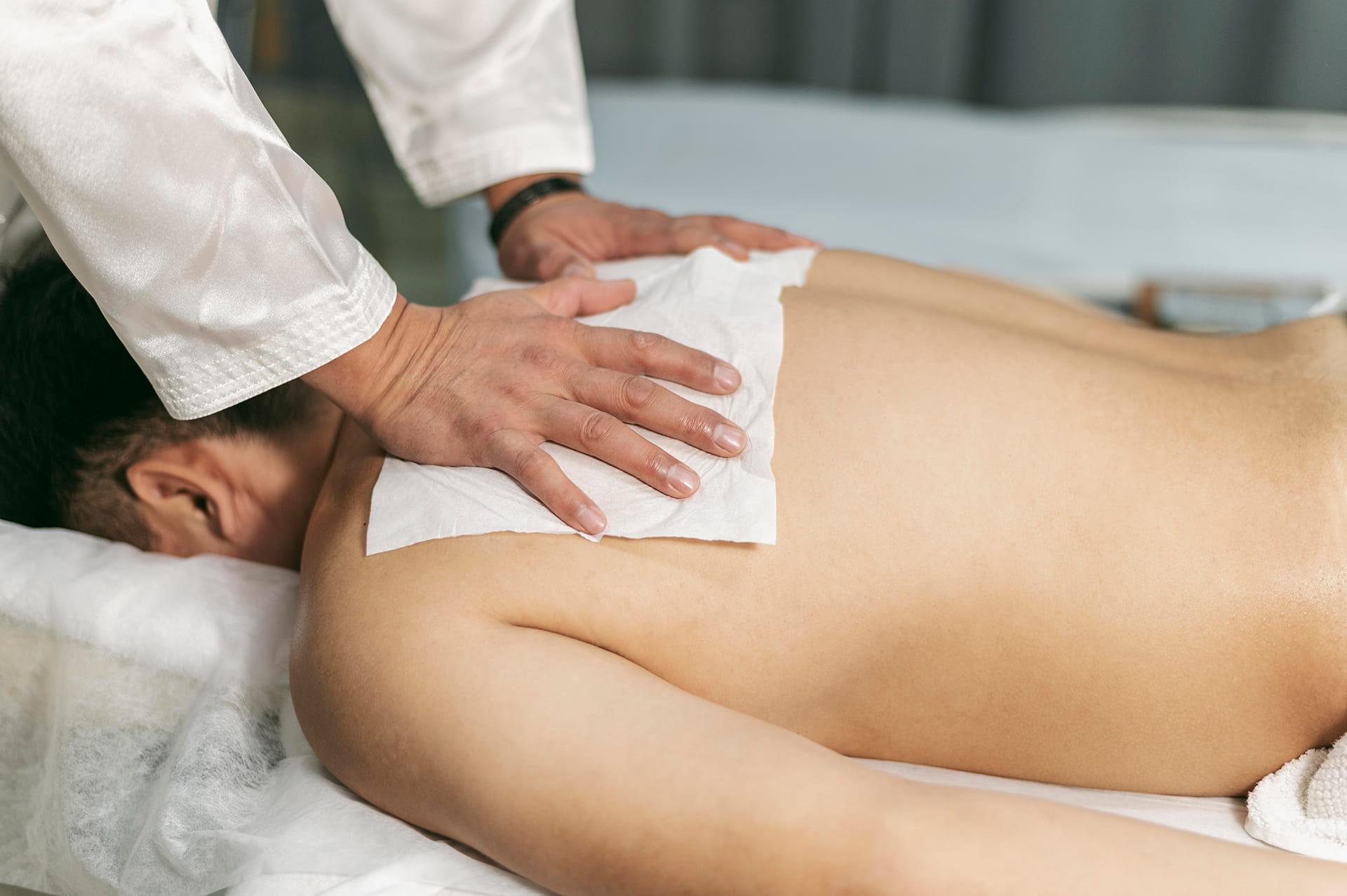
Apply a warm, damp washcloth to the affected area for 5-10 minutes morning and evening. The heat softens the skin and helps the hair work its way to the surface naturally. Do this for 2-3 days before adding chemical exfoliation.
2
Apply 2% Salicylic Acid Across the Area
Unlike scalp ingrown hairs (where you target each bump individually), chest and back ingrown hairs benefit from broad area treatment. Apply salicylic acid across the entire affected zone twice daily — this exfoliates dead skin from all follicles simultaneously, treating active bumps and preventing new ones.
3
Wear Loose, Breathable Clothing
Friction is a major aggravator. Switch to loose cotton T-shirts and avoid tight athletic wear, backpacks, or bras directly on the affected area until bumps resolve. This typically means 7-10 days of looser clothing.
4
Pause Hair Removal
Do not shave, wax, or sugar the area while ingrown hairs are present. Continuing hair removal traumatises follicles that are already inflamed and creates new ingrown hairs. Wait until the area is fully clear — typically 10-14 days — before resuming.
5
Resist Picking and Squeezing
The temptation to extract a visible hair on the chest is strong. Don't. Squeezing a chest or back ingrown hair almost always introduces bacteria from the skin surface into the follicle, converting an ingrown hair into folliculitis. If a hair is genuinely surface-visible after a week of treatment, use a sterilised needle to lift (not pull) it free.
★ Best for Chest & Back
Anthony Ingrown Hair Treatment
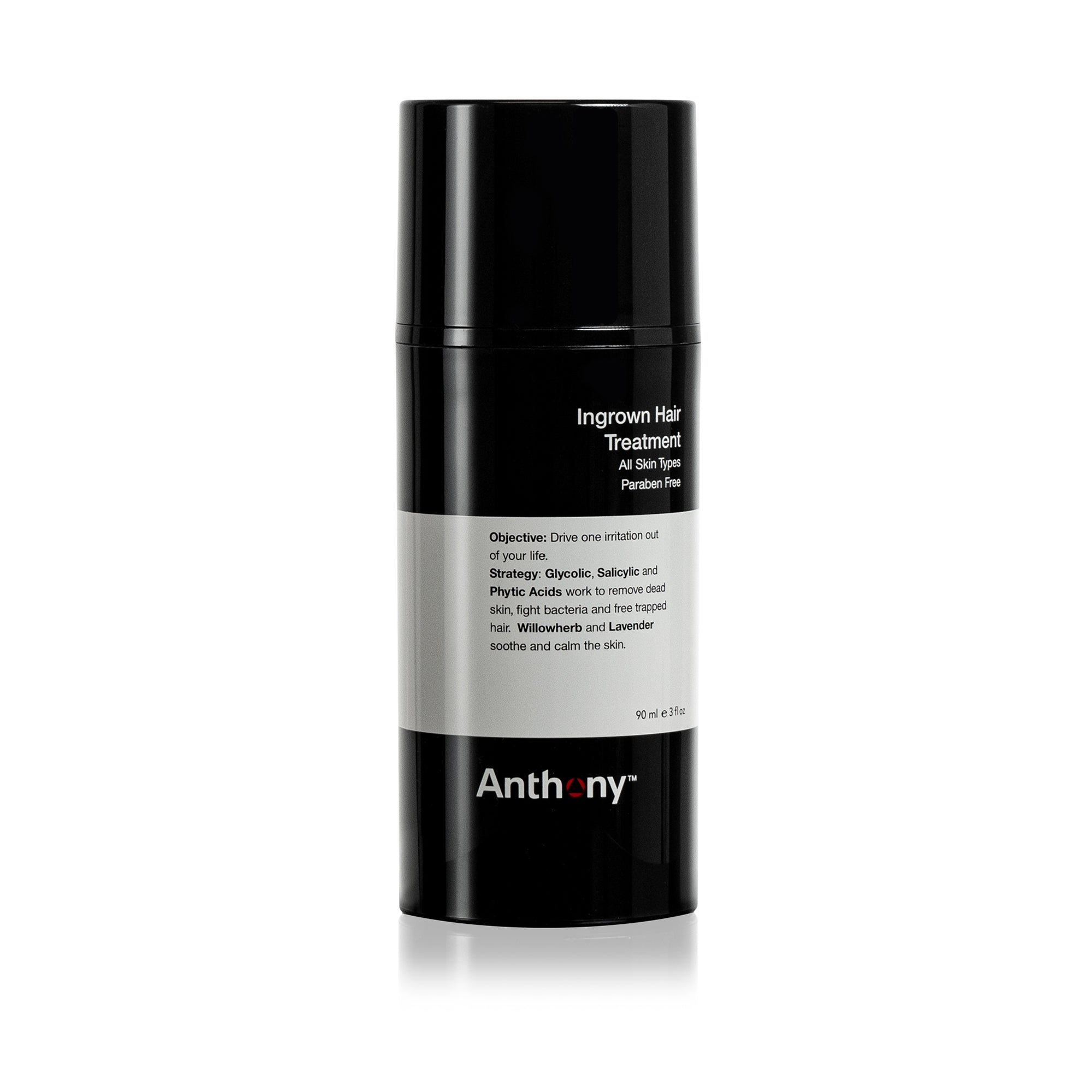
The dual salicylic + glycolic acid formula is ideal for the larger surface area of the chest and back. Apply with a cotton pad across the entire affected zone twice daily. Fragrance-free and non-irritating, even on freshly waxed skin.
Preventing Future Chest & Back Ingrown Hairs
Prevention is more important on the chest and back than almost any other area, because once a pattern of recurrence sets in, scarring and post-inflammatory hyperpigmentation become difficult to reverse. The four-part prevention protocol:
- Exfoliate 2-3x weekly — a chemical exfoliant (salicylic acid body wash or 2% BHA solution) applied to the chest and back removes the dead skin that traps emerging hairs. This is the single most effective long-term prevention strategy.
- Switch to electric clipper or single-blade safety razor — multi-blade cartridge razors cut hair below skin level, which dramatically increases ingrown hair rate. A single-blade razor cuts cleanly at the skin's surface without trauma.
- Always shave with the grain on chest and back — never against. The directional pattern is complex on the back; if unsure, consult a chest hair direction guide and follow each section's natural flow.
- Hydrate after hair removal — apply a non-comedogenic moisturizer immediately after shaving or waxing to maintain skin barrier and reduce inflammation that can trap emerging hairs.
When to Consider Laser Hair Removal
For chronic chest and back ingrown hairs that don't respond to topical treatment, laser hair removal is the most effective permanent solution. Most patients see significant reduction after 4-6 sessions and near-complete elimination of recurrent ingrown hairs after 6-8 sessions.
Laser is particularly recommended if you experience:
- Recurring clusters of ingrown hairs after every shave or wax
- Visible scarring or dark spots from previous ingrown hair episodes
- Folliculitis that develops repeatedly despite consistent topical care
- Chronic discomfort that interferes with daily clothing or activities
Read our complete laser hair removal guide for what to expect, costs, and how to choose a provider.
Important Note
Chest and back ingrown hairs are particularly prone to leaving dark spots (post-inflammatory hyperpigmentation), especially in medium and dark skin tones. Treating bumps quickly and avoiding picking are critical to prevent permanent marks. Read our guide on treating ingrown hair scars and dark spots.
When to See a Doctor
Most chest and back ingrown hairs resolve at home within 7-14 days. Consult a dermatologist if:
- A bump is rapidly growing larger or becoming intensely painful
- You see spreading redness, warmth, or red streaks moving outward
- The area produces significant pus or has an unpleasant odour
- You develop a fever or feel systemically unwell
- Multiple adjacent follicles are affected (this may be folliculitis or hidradenitis suppurativa, both of which require different treatment)
- Bumps recur in the same area repeatedly despite consistent topical care
Free Weekly Newsletter
Expert advice in your inbox
New product reviews, ingredient breakdowns, and dermatologist Q&As.
Free monthly newsletter. Unsubscribe anytime.
Best Products for Chest & Back Ingrown Hairs
The chest is easy to reach; the back isn't. So prevention here leans on a good exfoliating wash you can use in the shower — ideally with a long-handled applicator for the back — plus a spot treatment for the chest.
Best for reach (chest & back)
CeraVe SA Body Wash
$13 · salicylic 0.5% + ceramides
The most practical pick for these areas: it exfoliates the whole chest and back in the shower, reaching spots a serum never will. Pair it with a long-handled body brush for the mid-back.
Check price on Amazon →Best for active chest bumps
Anthony Ingrown Hair Treatment
$34 · glycolic + salicylic + mandelic
For the reachable bumps on the chest, a leave-on serum clears them faster than a wash alone. The mandelic acid keeps it gentle enough for daily use on thinner chest skin.
Check price on Amazon →For chronic chest or back ingrowns, IPL is worth it on the chest (the back is hard to self-treat) — see our IPL comparison.
Related Guides