The short version
Best overall: the Nood Flasher Pro ($349) — FDA-cleared, derm-designed, with real reports of ingrowns clearing. The Ulike IPL Hair Removal Device ($349) ties it on price and wins on comfort.
Before you buy anything: IPL only works on lighter-to-medium skin with dark hair. On dark skin (where ingrowns are most common) it's unsafe — see the skin-tone section below.
| Device | Price | Best for | |
|---|
| Nood Flasher Pro | $349 | Best overall | View → |
| Ulike IPL Hair Removal Device | $349 | Best value & comfort | View → |
| Braun Silk-Expert Pro 5 | $400 | Best auto-adjusting sensor | View → |
| Philips Lumea 9000 | $579 | Best premium / large areas | View → |
We may earn affiliate commissions through our links, but commissions never influence our picks or rankings. Read our full disclosure.
First: will IPL even work for you?
This is the single most important question, and most product roundups bury it. At-home IPL targets the pigment (melanin) in your hair. That means it needs a clear contrast between hair and skin to work safely:
- Works well: light-to-medium skin with dark brown or black hair.
- Does not work: blond, grey, red, or very fine light hair — there's not enough pigment for the light to target.
- Not safe: deep/dark skin tones. The light can't tell the difference between dark hair and dark skin, so it risks burns and worse hyperpigmentation.
This matters more for ingrown hairs than for general hair removal, because pseudofolliculitis barbae — the chronic ingrown/razor-bump condition — is most common and most severe on darker skin. If that's you, do not use at-home IPL. The right permanent fix for you is an Nd:YAG laser done by a dermatologist, which is specifically designed to be safe on deep skin tones. It costs more, but it's the difference between solving the problem and burning yourself.
Best overall
Best overall
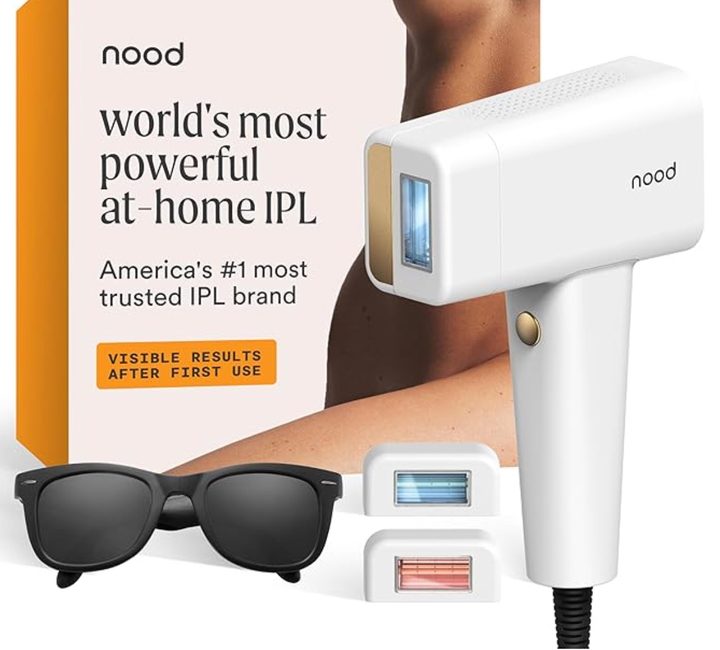
Nood Flasher Pro
$349 · FDA-cleared IPL · lifetime flashes
The most credible device for the money. It's FDA-cleared for permanent hair reduction — the line that separates a real device from the no-name units flooding Amazon — and it's designed with dermatologists. The standout is a lifetime flash guarantee (600,000 flashes, replaced if you run out). Most relevant here: users specifically report ingrown and folliculitis bumps clearing after a few weeks.
Best for: most people with suitable skin and hair who want a proven, no-gimmick device.
The honest downside: the treatment window is smaller than the Braun and Philips, so it's a little slower on large areas like full legs.
Check price on Amazon →Best value & comfort
Best value & comfort
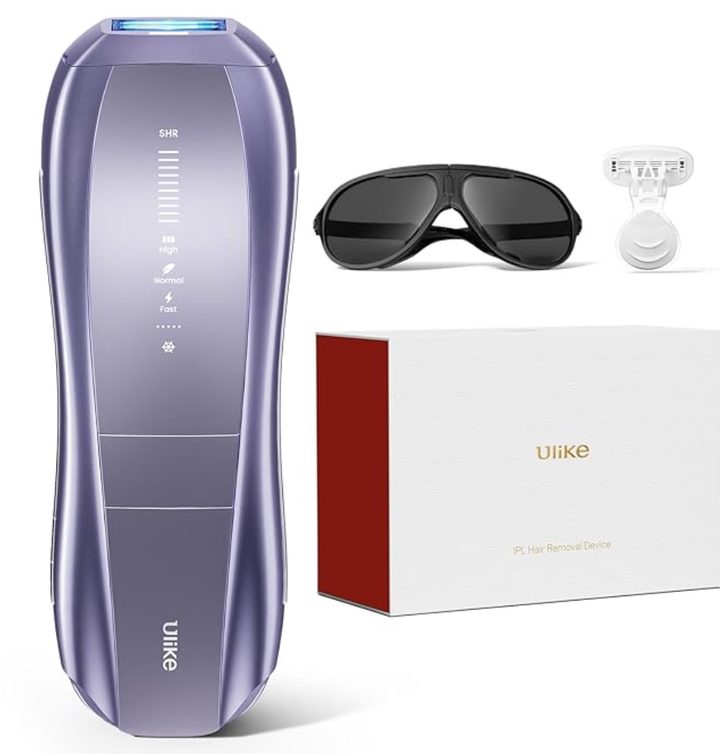
Ulike IPL Hair Removal Device
$349 · SHR mode · sapphire ice-cooling
Same price as the Nood, but built around comfort: a sapphire ice-cooling plate keeps the skin cold during each flash, which makes it close to painless and lets you move faster. Its SHR (super hair removal) mode delivers gentler, more frequent pulses that many people find easier to stick with — and consistency is what actually gets results. A genuine co-leader with Nood.
Best for: anyone nervous about the “rubber-band snap” of IPL, or who wants to cover larger areas comfortably.
The honest downside: not FDA-cleared in the same way the Nood is — it's a well-reviewed device, but if regulatory clearance is your deciding factor, the Nood edges it.
Check price on Amazon →Best auto-adjusting sensor
Best auto-adjusting sensor
Braun Silk-Expert Pro 5
$400 · IPL with skin-tone sensor
From an established appliance brand, with a skin-tone sensor that reads your skin before each flash and automatically sets a safe intensity — the most foolproof option for avoiding burns. A wider treatment window than the Nood makes it faster on legs and arms.
Best for: people who want hardware-brand reliability and a device that manages intensity for them.
The honest downside: the most expensive of the mid-tier picks, and like all IPL the results are permanent — be sure before you commit.
Check price on Amazon →Best premium / large areas
Best premium / large areas
Philips Lumea 9000
$579 · SenseIQ · large-area attachments
The premium pick. Philips' SenseIQ technology adapts the light to your body area, and the large-area attachments make full-leg and body sessions genuinely quick. The most advanced and the most expensive device here.
Best for: people doing large areas regularly who want the fastest, most refined experience and don't mind paying for it.
The honest downside: at $579 it's a big jump in price for gains most people doing smaller areas (bikini, underarms, face) won't need — the Nood or Ulike is plenty for them.
Check price on Amazon →How to actually use it for ingrown hairs
- Shave first — never wax or pluck. IPL needs the hair root in the follicle to target. Waxing removes it, which defeats the purpose.
- Be consistent. Most devices want weekly sessions for the first 4–12 weeks, then monthly top-ups. Skipping sessions is the #1 reason people think IPL “didn't work.”
- Keep exfoliating in the meantime. Use a salicylic or glycolic serum for any active bumps while the hair reduces — see our full treatments guide.
- Patch test a small area 24 hours before your first full session, every time you start a new area.
Where IPL fits vs. serums and clinic laser
Think of it as a hierarchy. Exfoliating serums are the daily management — cheap, fast on active bumps, but ongoing forever. At-home IPL is the permanent-reduction step for suitable skin — a few hundred dollars, a few months of effort, then largely done. Professional laser (including Nd:YAG for dark skin) is the strongest and the only safe permanent option for deep skin tones — pricier, but definitive. For most lighter-to-medium-skinned people, an at-home device plus a serum covers it. Our laser guide covers the clinic route in depth.
What to skip
- $40–$70 “IPL” devices with a perfect 5-star rating on a few dozen reviews. The rating is the tell — real devices sit at 4.2–4.5 across thousands of reviews. Cheap units are underpowered and the reviews are often seeded.
- Using IPL on dark skin because a listing claims it's “safe for all skin tones.” The physics don't change with marketing — see a derm for Nd:YAG instead.
- Waxing between sessions. It removes the target and resets your progress.
How we evaluate
We judge devices on four things: regulatory clearance and safety design (FDA clearance, skin-tone sensors); real-world effectiveness for hair reduction and, specifically, ingrown-hair reports; comfort and usability, which determines whether people actually finish a course; and value — including the honest downside we list for every pick. A board-certified dermatology reviewer checks the clinical and safety claims. We name the trade-offs, because a recommendation that hides them is just an ad.
Frequently asked questions
Does IPL actually work for ingrown hairs?
Yes — indirectly, and it's the only permanent fix. IPL reduces how much hair grows and how coarse it is, and fewer, finer hairs means far fewer ingrowns. It won't clear an existing bump overnight (use an exfoliating serum for that), but over a few months of consistent sessions it addresses the root cause.
What's the best at-home IPL for ingrown hairs?
For most people the Nood Flasher Pro — it's FDA-cleared, derm-designed, and users specifically report ingrown and folliculitis bumps clearing. The Ulike is the value-and-comfort pick at the same price thanks to its sapphire ice-cooling. Braun adds a skin-tone sensor; Philips Lumea is the premium large-area option.
IPL vs laser — what's the difference for ingrown hairs?
Almost every at-home “laser” device is actually IPL (intense pulsed light), which uses a broad spectrum of light. True laser is more focused and is mostly used in clinics. For at-home use the practical question isn't IPL vs laser — it's whether your skin tone and hair color are a good match (below).
Does at-home IPL work on dark skin?
Generally no, and this matters most for ingrown hairs because pseudofolliculitis is most common on darker skin. At-home IPL targets pigment and can burn or worsen hyperpigmentation on deep skin tones. If your skin is dark, skip at-home IPL and see a dermatologist for an Nd:YAG laser, which is designed to be safe across skin tones. IPL also doesn't work on blond, grey, or red hair.
How do I use IPL to prevent ingrown hairs?
Shave (don't wax or pluck) the area first so the light targets the hair in the follicle, run sessions on the recommended schedule — usually weekly at first, then monthly — and be patient: visible reduction takes about 4 to 12 weeks. Keep using an exfoliating serum in the meantime for any active bumps.
How long until IPL reduces my ingrown hairs?
Most people see meaningfully fewer ingrowns within 4 to 8 weeks of consistent use, with continued improvement over a few months as the hair thins. It's a long game, but unlike serums the results are largely permanent.
Related Guides